What Is a Pilot-Operated Self-Acting Pressure Regulator?
A pilot-operated self-acting pressure regulator uses the pressure of the process medium as its operating energy. Unlike an externally powered control valve, it does not require an electrical signal or separate pneumatic control system.
This type of regulator is commonly used for pressure control in low-pressure applications such as nitrogen blanketing systems. The pilot senses downstream pressure and controls the opening of the main valve to keep tank or pipeline pressure close to the preset value.
The basic control loop is simple:
Downstream pressure → Pilot sensing → Main valve control → Pressure correction
For nitrogen blanketing applications, this arrangement can provide automatic pressure regulation while keeping the system relatively simple.
How Does the Regulator Work?
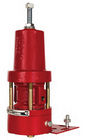
The regulator generally consists of a main valve, pilot valve, sensing line, spring adjustment mechanism, and pressure supply components.
1. Pressure Setting
The spring inside the pilot determines the target pressure.
By adjusting the spring preload, the pressure setpoint can be changed. After the required pressure is reached, the adjustment should be secured with the locking nuts to prevent unintended changes during operation.
2. Pressure Sensing
Downstream pressure is introduced into the pilot diaphragm chamber through the sensing line.
The sensed pressure acts on the diaphragm or sensing element and is compared with the force generated by the preset spring.
The difference between these forces determines the pilot valve position.
3. Main Valve Control
When downstream pressure is higher than the setpoint, the sensing force increases. The pilot moves toward the closed position and reduces the pressure acting on the main valve actuator chamber. The main valve then moves toward the closed position, reducing nitrogen flow.
When downstream pressure is lower than the setpoint, the spring force becomes dominant. The pilot opens and allows upstream pressure to enter the main valve actuator chamber. The main valve opens further, increasing nitrogen flow and helping the downstream pressure recover.
This continuous feedback process allows the regulator to respond automatically to changes in tank pressure.
Why Is This Type of Valve Used for Nitrogen Blanketing?
Nitrogen blanketing systems are often used to maintain a controlled pressure inside storage tanks and reduce the risk of air entering the tank.
A pilot-operated self-acting regulator can be useful in these systems because the pressure control mechanism does not depend on an external power source.
Typical considerations include:
- Low tank pressure control
- Nitrogen inlet regulation
- Storage tank pressure protection
- Pressure stabilization
- Simple self-operated control
- Continuous response to downstream pressure changes
The actual regulator configuration and pressure range should be selected according to the tank design, nitrogen supply pressure, required setpoint, flow rate, and operating conditions.
Key Adjustment Points During Commissioning
Correct adjustment is important for stable pressure control. Three areas should receive particular attention.
1. Setpoint Adjustment
The pilot spring is used to adjust the target pressure.
For the configuration described in this application:
- Turn clockwise to increase the gas inlet setting.
- Turn counterclockwise to decrease the setting.
- After adjustment, tighten the two locking nuts.
The exact adjustment direction should always be confirmed against the manufacturer's current operating instructions because pilot designs can differ.
2. Filter Regulator Pressure
The pilot-operated valve uses upstream pressure as the driving force and downstream pressure as the control signal.
The filter regulator is therefore an important part of the system.
For the configuration described here, the filter regulator pressure is normally around 0.23–0.25 MPa.
If the pressure is too low, the main valve may not respond correctly even when the downstream pressure changes.
3. Pilot Gas Distributor Adjustment
The black cap is used as an internal gas-flow distributor.
The factory setting described for this valve is:
Tighten clockwise, then turn back approximately 1/4 turn.
Normally, this adjustment does not need to be changed.
If the pilot flow is too low, a small clockwise adjustment can increase the flow. If the flow is excessive, a small counterclockwise adjustment can reduce it.
After adjustment, remember to secure the locking nut.
Common Problem: Tank Pressure Is Low but the Valve Does Not Open
One field problem is that the tank pressure falls below the setpoint, but the self-acting valve shows little or no response.
A practical inspection sequence is:
- Check the filter regulator pressure.
- Confirm that the pilot has sufficient driving pressure.
- Check the sensing line for blockage or abnormal pressure.
- Observe whether there is an abnormal continuous gas flow.
- Inspect the main valve seat and valve core for internal leakage.
If the filter regulator pressure is low while a slight continuous gas-flow sound can be heard, internal leakage of the valve should be considered.
Why Does Internal Leakage Occur?
For the Wuxi Intelligent V1 self-acting valve described in this application, the valve core uses a PTFE material.
If solid particles or other contaminants are present in the medium, they may become attached to the valve core or sealing surface.
During valve closing, these particles can scratch or damage the PTFE sealing surface. Once the sealing surface is damaged, the valve may no longer shut off completely.
This can result in continuous nitrogen flow even when the valve should be closed.
The problem is particularly important in nitrogen blanketing systems because continuous leakage can gradually increase the downstream pressure.
What Happens After Internal Leakage?
When internal leakage occurs, nitrogen can continue flowing toward the downstream side.
As the downstream pressure increases, the tank or controlled system may eventually approach or exceed the intended pressure range.
Another issue is that pressure-control systems have a response time. Even when the downstream pressure reaches a condition that should trigger the valve response, the valve may not react instantaneously.
Therefore, simply increasing or readjusting the setpoint may not solve the underlying problem.
If internal leakage has been confirmed, the more appropriate approach is to inspect the valve core and sealing components and replace the damaged valve core when necessary.
How to Reduce the Risk of Internal Leakage
For pilot-operated self-acting regulators used in nitrogen systems, several maintenance practices can help reduce problems:
- Keep the upstream medium as clean as practical.
- Check the filter regulator regularly.
- Inspect the sensing line for blockage or abnormal pressure.
- Avoid unnecessary adjustment of the pilot distributor.
- Check the valve seat and valve core when leakage is suspected.
- Verify the actual downstream pressure against the setpoint.
- Replace damaged sealing components instead of repeatedly adjusting the pilot.
- Confirm regulator operation after maintenance.
For systems with sensitive pressure requirements, regular inspection is especially important because a relatively small internal leak can continue to affect downstream pressure over time.
Practical Troubleshooting Checklist
| Problem |
Possible Cause |
Recommended Check |
| Valve does not open when pressure is low |
Insufficient pilot driving pressure |
Check filter regulator |
| Downstream pressure continues rising |
Internal leakage |
Inspect valve core and sealing surface |
| Valve response is unstable |
Incorrect pilot adjustment |
Check pilot setting and gas flow |
| Valve reacts slowly |
Sensing or pilot circuit problem |
Check sensing line and pilot |
| Continuous slight gas flow |
Possible internal leakage |
Inspect valve seat and valve core |
| Pressure cannot remain near setpoint |
Incorrect setting or valve leakage |
Check setpoint, pilot and main valve |
Maintenance Recommendations for Nitrogen Blanketing Systems
The most important point is to distinguish between a control adjustment problem and a mechanical sealing problem.
If the setpoint is incorrect, adjusting the pilot spring may solve the problem. However, if the valve core or sealing surface has already been damaged, continued adjustment will not restore proper shutoff.
For this reason, when a tank shows abnormal pressure behavior, maintenance personnel should first check the pilot supply pressure and sensing signal, then inspect the main valve for internal leakage.
For the V1 valve configuration discussed in this article, replacing a damaged valve core is an important corrective measure when PTFE sealing damage has been confirmed.
Conclusion
Pilot-operated self-acting pressure regulators provide a relatively simple way to control pressure without an external power source. In nitrogen blanketing systems, the pilot uses downstream pressure as a feedback signal and controls the main valve to regulate nitrogen flow.
However, stable operation depends on more than the pressure setpoint. Pilot supply pressure, sensing lines, internal gas-flow adjustment, valve cleanliness, and sealing condition all affect regulator performance.
If a valve does not respond correctly or the downstream pressure continues to increase, internal leakage should be considered before repeatedly adjusting the pressure setting.
For replacement or project requirements, provide the valve model, inlet pressure, outlet pressure, required flow rate, medium, temperature, and connection information so the suitable self-acting pressure regulator and replacement components can be checked.


 Mesajınız 20-3.000 karakter arasında olmalıdır!