How Control Valve Trim Design Affects Flow Capacity, Stability, and Service Life
Introduction
A control valve may have the correct nominal size and pressure rating, yet still deliver unstable control or experience premature wear. In many cases, the problem lies not in the valve body itself, but in the internal trim.
Control valve trim generally includes the components that regulate flow, such as the valve plug, seat ring, and, in some designs, a cage. Their geometry, materials, and guiding arrangements determine how the flow passage changes as the valve moves. These factors affect flow capacity, controllability, shutoff performance, and resistance to operating damage.
For process engineers and maintenance teams, understanding trim design is an important step toward selecting a valve that performs reliably under actual operating conditions.
1. What Is Control Valve Trim?
Control valve trim is the group of internal components that directly influence the regulation of process flow. In a typical globe-style control valve, the main trim components include:
-
Valve plug: Moves to adjust the available flow area.
-
Seat ring: Forms the seating surface when the valve closes.
-
Cage: Guides the plug and may help establish flow characteristics, reduce noise, or manage pressure drop.
-
Guiding and associated components: Help maintain alignment during valve movement.
The exact configuration depends on the valve design and intended service. A standard trim may be suitable for general process control, while specialized trim may be required for low-flow applications, high pressure drops, erosive media, or noise-sensitive installations.
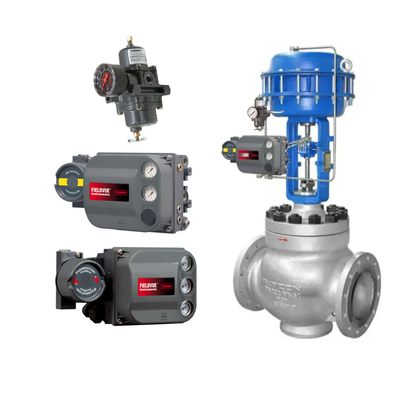
For example, Fisher HP Series control valves use cage-guided construction, while different trim options can be selected to meet specific flow-control and service requirements. The appropriate configuration depends on the application rather than the valve model alone.

2. How Trim Design Affects Flow Capacity
Flow capacity describes how much fluid a valve can pass under specified conditions. The effective flow area between the plug and seat changes as the valve travels, so the shape of these components directly influences the relationship between valve position and flow rate.
Three common inherent flow characteristics are:
-
Linear: Equal increments of valve travel produce approximately equal increments in flow coefficient under constant differential pressure.
-
Equal percentage: Equal increments of travel produce approximately equal percentage changes in flow coefficient.
-
Quick opening: Flow capacity increases rapidly at the beginning of travel, making this characteristic more common in applications requiring fast flow admission or on/off-oriented behavior.
These characteristics are not interchangeable. The appropriate choice depends on the process response, installed pressure drop, and behavior of the complete control loop.
Oversized valves can create another problem. If the required flow is achieved with the valve operating close to its seat for most of the time, small travel changes may produce difficult-to-manage flow adjustments. Restricted-capacity trim can sometimes address this issue without changing the entire valve body, provided the valve design supports the required configuration.
When evaluating a valve, engineers should therefore consider both the maximum required flow and the normal operating range. Selecting trim only on the basis of the pipeline size may lead to poor controllability.
3. Trim Design and Control Stability
Stable control requires the valve plug to move predictably and maintain appropriate alignment with the seat and guiding surfaces. Mechanical vibration, excessive friction, misalignment, and unsuitable flow characteristics can all affect performance.
Cage-guided trim helps maintain plug alignment throughout its travel. In appropriate designs, the cage also provides a practical way to establish flow characteristics or incorporate specialized flow passages.
Balanced trim is another consideration. By reducing the net pressure force acting on the plug, a balanced design can reduce the actuator force required for movement. This may be useful in applications involving high pressure differentials, although the final actuator selection must still account for the valve's actual operating conditions and required shutoff performance.
If a control valve hunts, responds unevenly, or struggles to maintain its setpoint, trim should not be blamed automatically. Instrument air problems, actuator friction, positioner settings, process disturbances, and controller tuning may produce similar symptoms. A proper diagnosis should examine the complete valve assembly and control loop.
4. Material Selection and Wear Resistance
Trim materials must be compatible with the process medium, temperature, pressure, and expected wear mechanisms.
Common concerns include:
-
Erosion: High-velocity fluid or entrained particles gradually remove material.
-
Corrosion: Chemical attack damages the plug, seat, cage, or other wetted surfaces.
-
Mechanical wear: Repeated movement and contact affect guiding and seating surfaces.
-
Thermal effects: High temperatures and temperature cycling can influence material properties, clearances, and sealing performance.
Hardened trim materials may improve wear resistance in demanding services, but hardness alone does not guarantee long service life. Material selection must account for corrosion resistance, temperature limits, fluid chemistry, and the type of damage expected.
For services containing solids or abrasive particles, the internal flow path also matters. A trim arrangement that performs well with clean fluid may not be suitable when the medium contains sand, catalyst fines, or other contaminants.
5. When Is Specialized Trim Necessary?
Standard trim is often adequate for ordinary pressure and flow conditions. Specialized trim becomes more relevant when the process presents specific challenges.
| Operating condition |
Design consideration |
| Very low required flow |
Restricted-capacity trim and appropriate rangeability |
| High pressure differential |
Pressure management, plug stability, and actuator capability |
| Cavitation risk |
Anti-cavitation trim selected for the liquid service |
| High aerodynamic noise |
Noise-attenuation trim for gas or steam service |
| Dirty or particle-laden fluid |
Flow passages designed to reduce plugging and erosion risks |
| Frequent throttling |
Suitable flow characteristics, materials, and guiding arrangements |
For example, Fisher Cavitrol III trim is designed for cavitating liquid services, while Fisher Whisper Trim solutions address noise in appropriate gas and steam applications. These are specialized options, not universal replacements for standard trim. Selection requires actual process data and confirmation of the operating envelope.
6. A Practical Checklist for Trim Selection
Before specifying a control valve, collect the following information:
-
Minimum, normal, and maximum flow rates.
-
Upstream and downstream pressures at relevant operating conditions.
-
Process medium, including solids or contaminants.
-
Operating and design temperatures.
-
Required flow characteristic and control range.
-
Shutoff requirements and expected frequency of operation.
-
Noise, cavitation, erosion, or corrosion concerns.
-
Available actuator output and maintenance requirements.
This information helps determine whether standard trim is sufficient or whether a specialized design is justified. It also reduces the risk of selecting a valve based solely on nominal size or maximum flow capacity.
Conclusion
Control valve trim has a direct influence on flow capacity, control stability, shutoff performance, and service life. The valve plug, seat ring, cage, guiding arrangement, and material selection must work together to match the process requirements.
For general service, standard trim may provide reliable performance. For low-flow control, high pressure drops, noise-sensitive systems, or contaminated media, a more specific trim configuration may be necessary.
The best selection begins with accurate operating data and a clear understanding of the process problem. Matching the trim to the actual service can help improve control performance, reduce premature wear, and avoid unnecessary maintenance costs.
Need help identifying a suitable control valve or trim configuration? Share your flow range, pressure, temperature, and process medium to support a more accurate technical assessment.


 Mesajınız 20-3.000 karakter arasında olmalıdır!